Children usually notice more than adults think they do.
When adults become tense about a hurricane, tornado warning, wildfire, blackout, or other emergency, children notice the change in voices, routines, television coverage, and hurried preparation. Avoiding the subject completely can make the unknown feel even larger.
The goal is not to give a child every frightening possibility. It is to give them enough true information to understand what is happening and what the family or school is doing about it.
Move attention from danger to preparation.
A child may ask, “Is the storm going to hit us?” Sometimes the honest answer is that nobody knows exactly yet. You can pair uncertainty with action: “We’re watching the forecast, we have supplies, and if we need to move somewhere safer, we know where to go.”
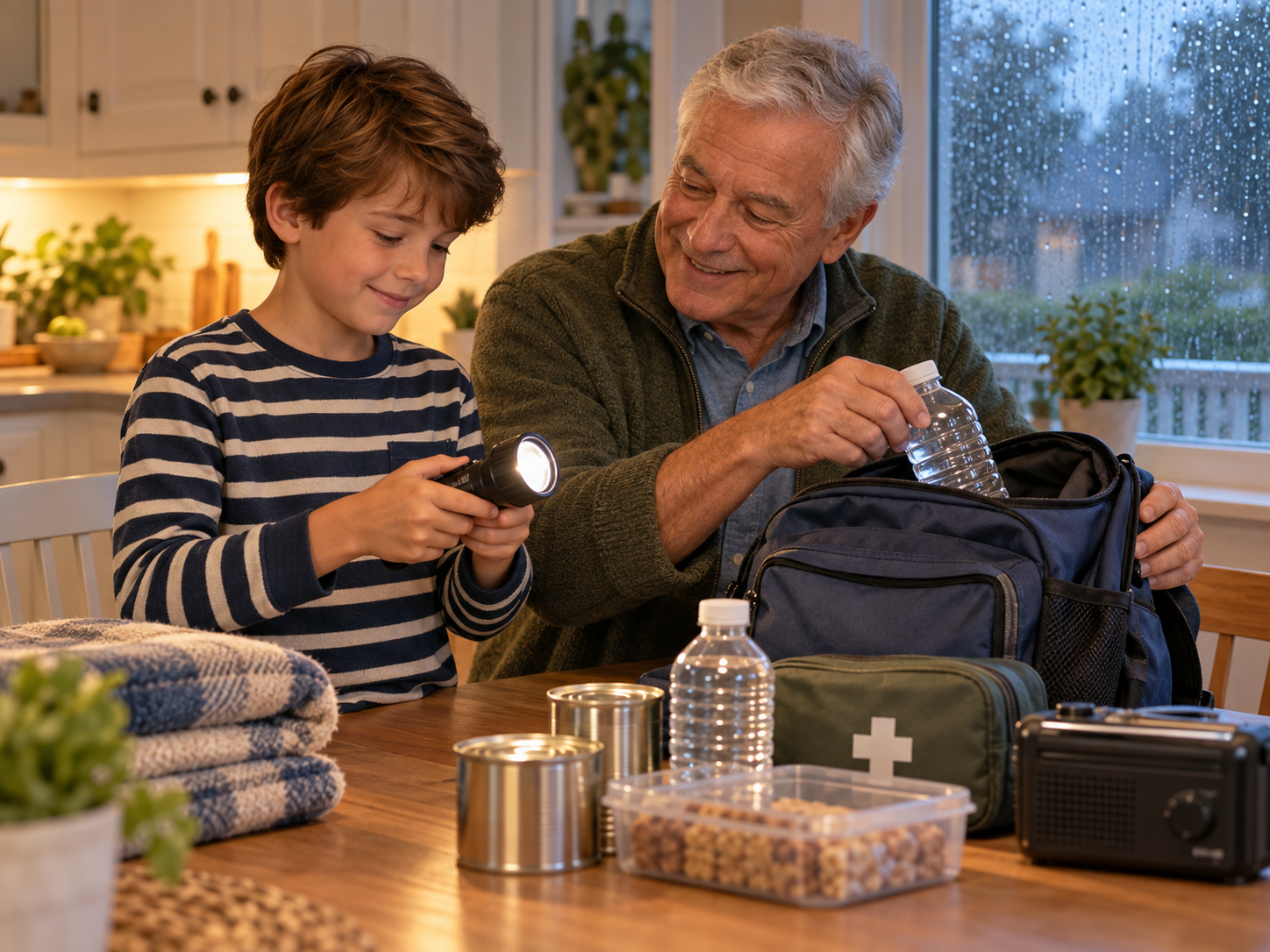
Preparedness gives the child something concrete to see. Flashlights are ready. Water is stored. The phone is charged. Pets have a plan. Important items are together. Adults are not merely worrying; they are doing.
A Calm Answer
“I can’t promise exactly what the storm will do. I can tell you what we are doing to stay as safe as we can.”
Give the child a useful role.
Age-appropriate participation can reduce helplessness. A child might help gather books and games, put pet supplies together, fill a water bottle, check batteries with an adult, or choose comfort items for an emergency bag.
The job should be real but not burden the child with adult responsibility. They are helping the plan, not becoming responsible for everyone’s safety.
Limit the stream of frightening information.
Adults may need frequent updates. Children usually do not need hours of dramatic footage, repeated warnings, or speculation. Give them information matched to what they need to know and answer the questions they actually ask.
Afterward, let them talk about what they noticed. Children can process an emergency long after the weather clears.
The Kellan connection
The Day the Storm Came can help children see that being afraid and being useful can exist at the same time. Kellan does not need to pretend the storm is nothing. He can learn what the adults are doing, take a sensible part, and discover that preparation gives fear somewhere to go.
See the Kellan Story List →